Pelvic Floor, Postnatal Physio and Finding the Right Childcare: The London Guide No One Gives You
Written by Mathilde Renard, Physiotherapist & Pelvic Health Specialist, Renard Clinic London
With a contributing section by Fanny Di Domenicantonio, Founder and Director, Fox & Cubs Nanny & Private Staff Agency
Nobody hands you a roadmap when you leave the hospital with a new baby. You have a discharge summary, a handful of leaflets, and a quietly overwhelming sense that you are supposed to know what comes next.
Most new mothers in London figure it out as they go, piecing together postnatal recovery advice from midwives, NCT groups, and well-meaning friends. But two things consistently fall through the gap: proper postnatal rehabilitation and a plan for who is going to help with the baby while you recover.
This article covers both.
Why postnatal physiotherapy deserves more attention than it gets
Pregnancy and birth place significant demands on the body, not only on the pelvic floor, but also on the abdominal wall, breathing mechanics, posture, and the way the body manages pressure and load.
The pelvic floor is a group of muscles and connective tissue that forms the base of the pelvis, supporting the bladder, bowel, and uterus. During pregnancy, these muscles carry additional load for nine months. During birth, whether vaginal or by caesarean, they experience significant strain.
Common signs that your pelvic floor needs attention after birth include leaking urine when you cough, sneeze, or exercise; a feeling of heaviness or pressure in the pelvic area; pain during intercourse; and lower back or hip discomfort that does not resolve on its own. These are not things to wait out. They are signals that your body needs targeted, professional support.
But postnatal physiotherapy is not only for women who have symptoms.
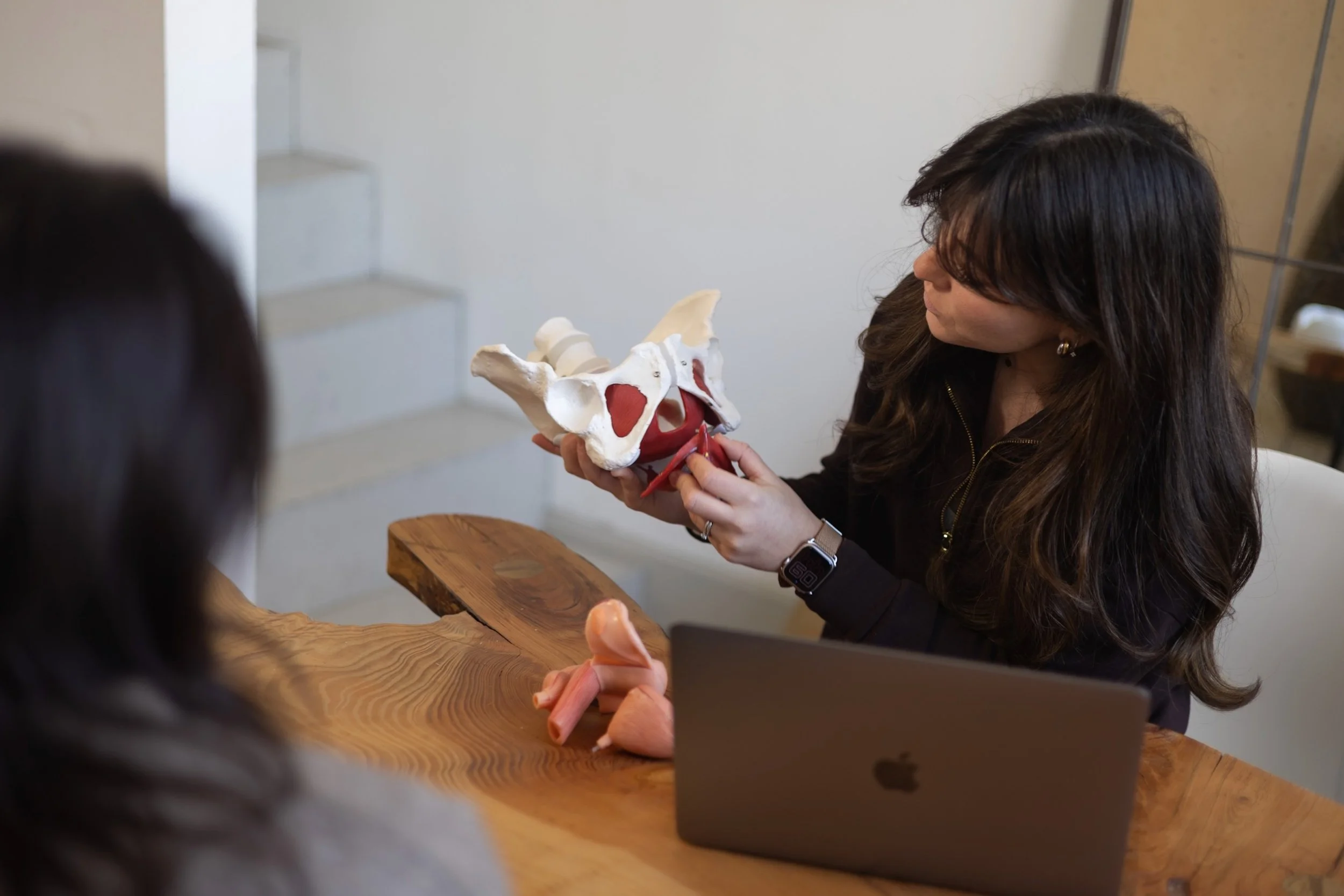
A postnatal assessment is also an opportunity to understand how your body has recovered from pregnancy and birth, check your pelvic floor and abdominal function, assess scars where relevant, and make sure you are returning to movement and exercise in a way that respects tissue healing and gradually rebuilds strength and capacity.
Whether your goal is simply to feel comfortable and strong in your body again, return to the gym, start running, lift weights, or get back to a specific sport, having appropriate guidance can help you progress safely and confidently rather than relying on a generic timeline.
The NHS recommends pelvic floor exercises after birth, and rightly so. But pelvic floor exercises are only one part of postnatal rehabilitation. A specialist pelvic floor physiotherapist can assess the specific state of your pelvic floor, identify areas of tension or weakness, assess abdominal and overall functional recovery, and design a rehabilitation programme that is tailored to your body, your birth experience, and the activities you want to return to.
What a postnatal physiotherapy assessment actually involves
Many women feel uncertain about what to expect from a first postnatal physio appointment, particularly one that involves pelvic floor assessment. At Renard Clinic, the approach is built around discretion, comfort, and genuine clinical expertise.
A first assessment typically covers a detailed conversation about your pregnancy and birth experience, any symptoms you are noticing, your activity levels, and your recovery goals. This also includes discussing what you would like to return to, whether that is everyday movement, the gym, running, or a specific sport.
The assessment looks beyond the pelvic floor alone. Depending on your individual needs, it may include your abdominal wall, breathing and pressure management, movement and strength, as well as any perineal or C-section scar. An internal assessment may be offered where clinically appropriate, but is never obligatory.
The session ends with a clear, personalised plan, not a generic set of exercises, but a progressive rehabilitation programme that reflects where your body actually is, normal healing timelines, where you want to get back to, and what it needs to recover well.
For women who have had a C-section, postnatal physio also includes assessment and treatment of the C-section scar. Once the tissues have healed sufficiently, gentle manual techniques can be used to improve scar mobility, reduce sensitivity, and help restore comfortable movement through the abdominal wall.
The recommendation at Renard Clinic is to begin postnatal physiotherapy from around six weeks after a vaginal birth and eight weeks after a C-section, though an initial consultation can be arranged earlier for women who are experiencing symptoms or simply want guidance on what they can safely do during the early stages of recovery.

When should you start? And what gets in the way?
The most common reason women delay postnatal physio is not lack of awareness. It is lack of capacity. When you have a newborn at home, carving out an hour for yourself to travel across London, to sit in a waiting room, to be present in an appointment requires a level of logistical support that many families simply do not have in place.
And yet looking after your own recovery is an important part of the postnatal period. Having the right support can give you the time and space to attend appointments, follow a rehabilitation programme, gradually return to exercise, or simply rest when your body needs it.
This is where practical help at home becomes part of the recovery picture, not a luxury, but a genuine enabler of the care a new mother needs to access.
Finding the right childcare and household support after birth
Contributing section by Fanny Di Domenicantonio, Founder and Director, Fox & Cubs Nanny & Private Staff Agency
The families I work with who recover most smoothly after birth are rarely the ones with the most help. They are the ones with the most consistent, well-matched help, a maternity nurse who genuinely understands the household, or a nanny who slots seamlessly into the routines a family has already begun to build.
What makes the difference is not simply having someone there. It is having the right person there, someone who takes genuine ownership of the baby’s care and the household’s rhythm, so that a new mother can attend her postnatal physio appointment, rest properly between feeds, or simply have an uninterrupted hour to herself without worrying about what is happening downstairs.
At Fox & Cubs, we work with families from pregnancy through to long-term placement. For many families, the first conversation is about a maternity nurse, a specialist in newborn care who can support the household through those first four to twelve weeks. Others come to us a little later, when they are beginning to think about returning to work and realise that the childcare structure they need is more substantial than they initially planned for.
What we always say is this: the earlier the conversation, the better the outcome. Finding a nanny or maternity nurse who is genuinely the right fit takes time and the families who begin that process during pregnancy arrive at it with choices rather than pressure.
If you are in the postnatal period and beginning to think about what longer-term childcare looks like for your family, we would love to hear from you.
Fox & Cubs, specialist nanny agency in London
Building your postnatal support team

@Chloe_artieres_photographe
Postnatal recovery in London does not have to be as isolated as it often feels. The combination of specialist clinical care, pelvic floor physio, abdominal rehabilitation, scar treatment, guided return to movement and exercise and reliable, professional childcare at home creates the conditions in which a new mother can actually recover, rather than simply endure.
Recovery will look different for every woman. Some will need support for specific symptoms; others may simply want reassurance that their body is healing as expected and a clear plan for returning to the activities they love.
Both matter. Neither replaces the other. And both are worth investing in early.
Renard Clinic offers postnatal physiotherapy, pelvic floor rehabilitation, guided return to exercise, and C-section scar treatment from Harley Street and NW8. To book an initial assessment, visit renardclinic.com or call +44 7513 625406.
Fox & Cubs Nanny & Private Staff Agency places exceptional maternity nurses, nannies, and household professionals with families across London and internationally. To begin the conversation, visit www.foxandcubs.com.
About the Contributors
Mathilde Renard is a HCPC, CSP and POGP registered physiotherapist specialising in pelvic health and postnatal rehabilitation. She founded Renard Clinic to provide personalised, discreet, and expert care for women and men at every stage of life. Renard Clinic operates from Harley Street and NW8, London.
Fanny Di Domenicantonio is the Founder and Director of Fox & Cubs Nanny & Private Staff Agency, placing exceptional nannies, maternity nurses, and private household professionals with families across London, Monaco, and internationally. In 2026, Fox & Cubs was voted Best Nanny Agency in the UK at the UK Nanny Awards, and won Best Small Recruitment Business at the Global Recruiter UK Industry Awards. Connect with Fanny on LinkedIn or visit foxandcubs.com.